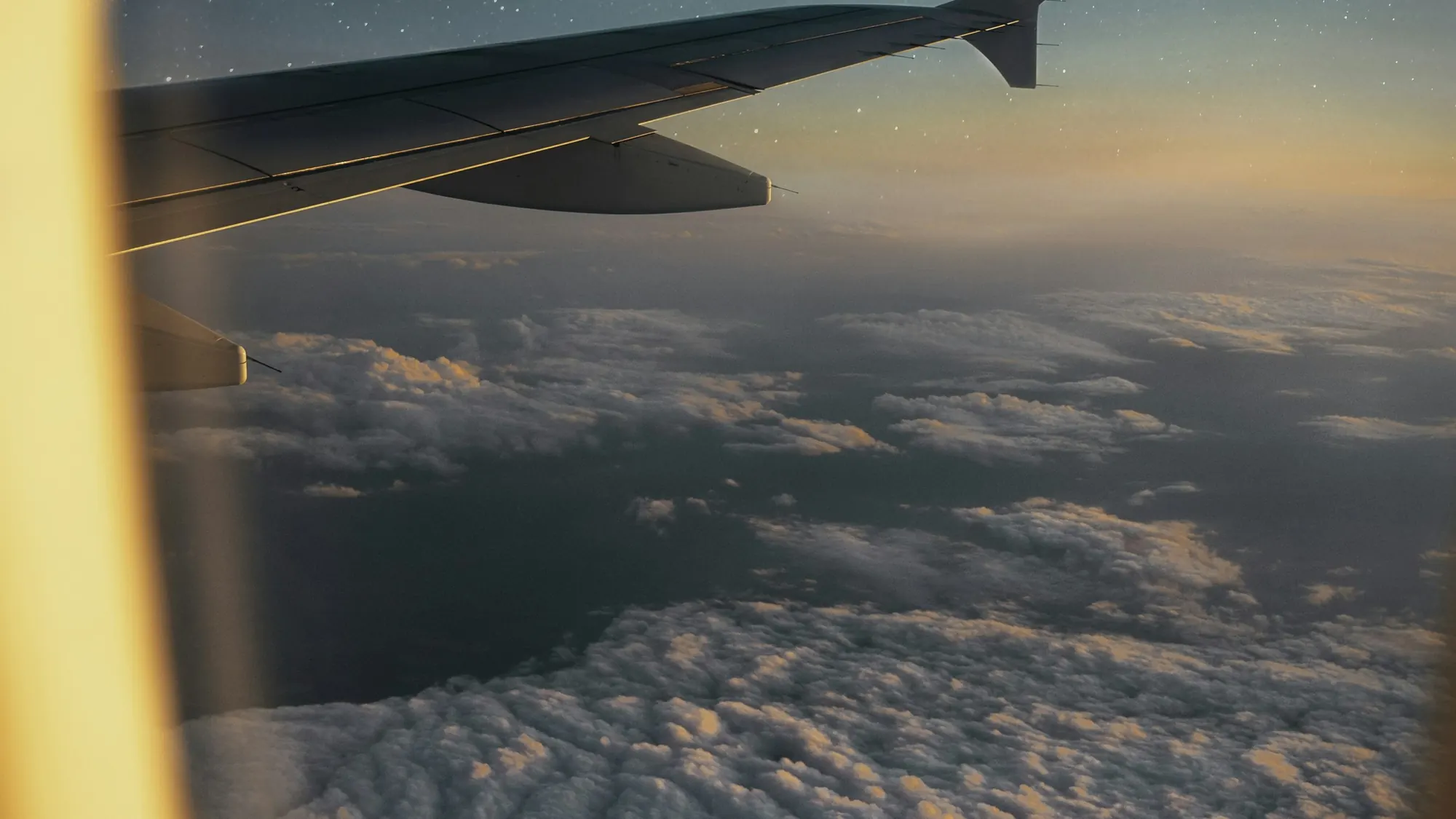
Fly 1,500 nautical miles east across the United States in winter and you can land half an hour or more sooner than if you flew the same distance west. On an airline that is a curiosity. On a private charter, which is billed by the flight hour, the wind ends up on the invoice.
The jet stream, briefly
Over North America and the North Atlantic, the strongest winds at cruising altitude blow from west to east. This band of fast-moving air, the jet stream, is strongest in winter, when the temperature contrast between polar and tropical air is greatest, and its core speed can exceed 100 knots. Business jets cruise in the low forties of thousands of feet, often close to the levels where the jet stream runs.
An aircraft’s speed through the air stays roughly the same whichever way it flies. What changes is its speed over the ground. Flying west into a headwind, ground speed drops; flying east with a tailwind, it rises. Time in the air, and therefore the bill, follows ground speed.
What it does to a real route
Take Westchester to Aspen, about 1,520 nautical miles, in a midsize jet cruising at about 430 knots. The table assumes an average 50-knot wind component along the route, a moderate winter figure.
| Westchester and Aspen, midsize jet | Ground speed | Time incl. 25 min | Flight cost at $5,750/h |
|---|---|---|---|
| Still air | 430 kt | about 3h 55m | about $22,700 |
| Westbound, 50 kt headwind | 380 kt | about 4h 25m | about $25,400 |
| Eastbound, 50 kt tailwind | 480 kt | about 3h 35m | about $20,600 |
The westbound leg costs close to $5,000 more than the eastbound one for the same distance, and the round trip as a whole still costs more than two still-air legs, because time lost into a headwind is not fully regained with the tailwind on the way home. That is why New York to Aspen is commonly planned at around four and a half hours, even though the distance alone suggests less.
The same pattern shows up across the Atlantic. London to New York westbound typically takes about 7h 30m to 8h 30m in a business jet, while the eastbound crossing is often an hour or more quicker.
Range shrinks too
Headwinds do not only add time; they also eat into range. An aircraft that makes a trip nonstop eastbound may need a fuel stop westbound, especially with every seat filled and the hold full of skis. A fuel stop adds descent, ground time and climb, often 45 minutes or more, and on a hard winter day it can decide which aircraft is right for the trip.
Winter adds its own lines
Wind is not the only seasonal effect on a westbound winter trip:
- De-icing. Frost, snow or freezing rain must be removed before departure, which costs money and time, and is charged per event.
- Mountain airports. High-elevation airports such as Aspen face winter weather, seasonal congestion and restrictions. Alternates such as Eagle/Vail, Rifle and Grand Junction exist for a reason.
- Holiday demand. The busiest winter dates tighten availability, which raises prices across every size of aircraft.
Does summer change the picture?
In summer the jet stream weakens and drifts north, so the gap between eastbound and westbound times shrinks. It rarely disappears: winds at cruise altitude over the US blow from the west for most of the year, so westbound legs tend to run a little longer whatever the month. Summer brings its own variables instead. Thunderstorms over the Southeast and the Rockies can force reroutes, and hot afternoons reduce takeoff performance at high-elevation airports, which can limit how much fuel and how many passengers an aircraft can carry out of a place like Aspen.
How the calculator handles it
The calculator cannot know the forecast for your date, so it uses a range. The low case is still-air time. The high case adds 3% for routing plus up to 12% more in proportion to how far west the track points. A due-west route gets the full allowance, a due-south one none. On Westchester to Aspen in a midsize jet, that gives about 3h 55m to 4h 30m one way, which brackets the time an operator would usually plan.
What to do with this
- Expect the westbound leg to cost more. On a round trip, budget for an extra half hour or so going west in winter.
- Size the aircraft for the hard direction. If a light jet only just makes the trip in still air, it may need a stop into a winter headwind. A midsize or super-midsize often avoids it.
- Ask for flight time each way. A good quote states the planned time for each leg, so you can see the wind already priced in.
- Keep timing flexible. Jet stream position changes day to day; operators plan with forecast winds close to departure.
Reading a winter quote
When a quote arrives for a westbound winter trip, look for three things: the planned flight time for each leg, with the westbound one longer; whether a fuel stop has been planned, and why; and whether de-icing appears as a possible extra. If both legs of a long route show identical times in January, ask how they were worked out. They may come from a table rather than from a flight plan with forecast winds, and the invoice could differ.
Run your route through the calculator in both directions to see the difference, then ask for a quote with the real flight plans.